
If you are looking for common Jewish last names, some of the best-known include Cohen, Levi, Katz, Shapiro, Goldberg, Friedman, Rosenberg, Kaplan, and Levine. Many Jewish surnames come from Hebrew traditions, occupations, places, family relationships, or words used in German and Yiddish.
But a Jewish last name can tell you much more than a name alone. It may offer a clue about where a family once lived, what an ancestor did, which language they spoke, or which Jewish community they belonged to. For example, Cohen and Levi have deep biblical and religious connections, while names such as Goldberg and Rosenberg reflect the German and Yiddish naming traditions common among Ashkenazi Jews.
This guide brings together 180+ Jewish last names, with simple meanings and origins where they are known. You will find popular Jewish surnames, traditional family names, Ashkenazi and Sephardic surnames, biblical names, occupational names, and surnames connected to places. If you are researching your family tree, choosing a realistic surname for a character, or simply curious about Jewish naming traditions, this list gives you a useful place to start.
1. Most Common Jewish Last Names
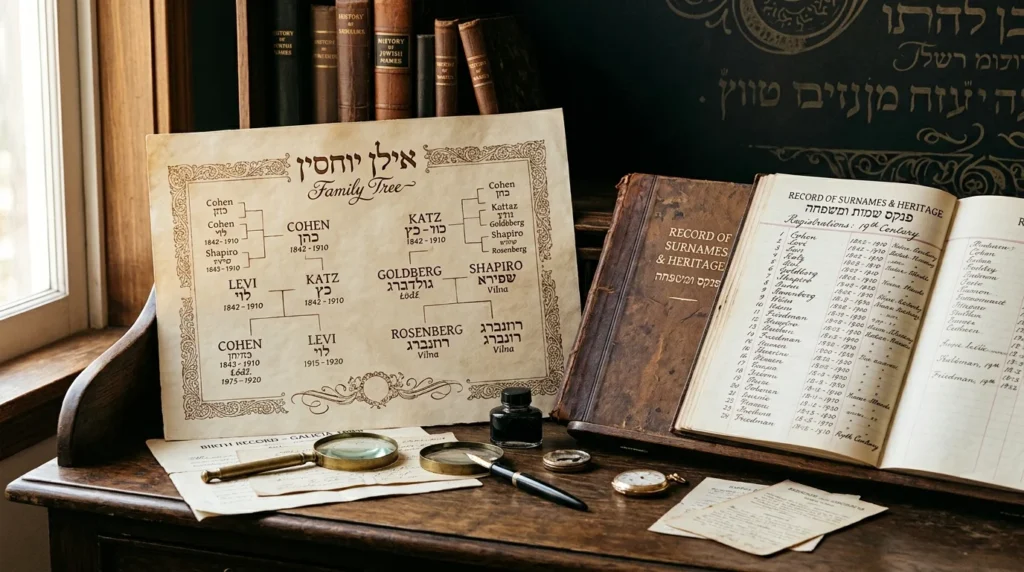
These are some of the Jewish surnames that many readers recognize immediately. Several have strong historical or religious connections.
Cohen
Meaning & origin: Priest; Hebrew origin. Cohen is traditionally connected with the Jewish priestly class, or Kohanim.
Best suited for: A family or character with a strong connection to Jewish religious history.
Levi
Meaning & origin: Joined or attached; Hebrew origin. Levi is associated with the biblical Tribe of Levi.
Best suited for: A traditional Jewish family name with ancient roots.
Katz
Meaning & origin: A traditional Hebrew abbreviation connected with Kohen Tzedek, or righteous priest.
Best suited for: A character or family with a historic Jewish background.
Shapiro
Meaning & origin: Traditionally linked with Speyer, a German city; Ashkenazi Jewish origin.
Best suited for: A character with Central or Eastern European Jewish roots.
Goldberg
Meaning & origin: Gold mountain; German/Yiddish origin. It has a classic Ashkenazi sound.
Best suited for: A traditional family in a historical or modern setting.
Friedman
Meaning & origin: Peaceful person; German/Yiddish origin. The name has a warm and calm feeling.
Best suited for: A friendly, thoughtful, or peaceful character.
Rosenberg
Meaning & origin: Rose mountain; German/Yiddish origin. It combines beauty with strength.
Best suited for: A traditional Ashkenazi family or historical character.
Kaplan
Meaning & origin: A European Jewish surname associated with religious service and the word for chaplain.
Best suited for: A family with traditional religious or scholarly roots.
Levine
Meaning & origin: A form related to Levi; Hebrew and European Jewish usage.
Best suited for: A modern character with a traditional Jewish family name.
Rubin
Meaning & origin: A traditional European Jewish surname associated with names such as Reuben and Ruby.
Best suited for: A modern or historical Jewish character.
2. Traditional Jewish Surnames
Traditional surnames often remain popular because they connect families with older generations and Jewish history.
Epstein
Meaning & origin: Traditionally associated with Eppstein, a place in Germany; Ashkenazi origin.
Best suited for: A character with Central European Jewish ancestry.
Horowitz
Meaning & origin: Traditionally connected with Horovice, a place in Bohemia; Ashkenazi origin.
Best suited for: A historical character from a Central European Jewish family.
Rabinowitz
Meaning & origin: Traditionally associated with a rabbi or descendant of a rabbi; Slavic/Yiddish formation.
Best suited for: A scholar, teacher, or religious family character.
Mendelsohn
Meaning & origin: Son of Mendel; German/Yiddish patronymic surname.
Best suited for: A historical European Jewish family.
Jacobson
Meaning & origin: Son of Jacob; biblical Hebrew name combined with a European surname form.
Best suited for: A family with biblical and European naming traditions.
Davidson
Meaning & origin: Son of David; European patronymic form based on the biblical name David.
Best suited for: A family with a strong biblical heritage.
Isaacson
Meaning & origin: Son of Isaac; biblical and European patronymic origin.
Best suited for: A traditional Jewish family or historical character.
Samuelson
Meaning & origin: Son of Samuel; European surname based on a Hebrew biblical name.
Best suited for: A family with a classic biblical connection.
3. Ashkenazi Jewish Last Names
Ashkenazi Jewish surnames developed among Jewish communities in Central and Eastern Europe. Many use German, Yiddish, Hebrew, or Slavic elements.
Weiss
Meaning & origin: White; German/Yiddish origin. It is short and easy to recognize.
Best suited for: A classic Ashkenazi family or modern character.
Stein
Meaning & origin: Stone; German/Yiddish origin. The meaning suggests strength and stability.
Best suited for: A dependable, strong, or serious character.
Greenberg
Meaning & origin: Green mountain; German/Yiddish origin. It has a natural but powerful image.
Best suited for: A character with Ashkenazi European roots.
Rosenfeld
Meaning & origin: Rose field; German/Yiddish origin. The name combines nature and beauty.
Best suited for: An artistic or gentle family character.
Stern
Meaning & origin: Star; German/Yiddish origin. It suggests brightness and guidance.
Best suited for: An intelligent, hopeful, or inspiring character.
Adler
Meaning & origin: Eagle; German/Yiddish origin. The eagle suggests vision, freedom, and strength.
Best suited for: A bold or independent character.
Zuckerman
Meaning & origin: Sugar man; German/Yiddish origin. It is a memorable traditional surname.
Best suited for: A fictional character with Ashkenazi roots.
Landau
Meaning & origin: Traditionally associated with Landau, a European place name.
Best suited for: A historical Central European Jewish family.
4. Jewish Last Names With Biblical Connections
Some Jewish surnames preserve links to biblical people, tribes, or religious traditions.
Ben-David
Meaning & origin: Son of David; Hebrew origin. David is one of the best-known figures in the Hebrew Bible.
Best suited for: A family with a strong biblical or Jewish identity.
Ben-Ami
Meaning & origin: Son of my people; Hebrew origin. It has a strong sense of community and belonging.
Best suited for: A character who values family, culture, and tradition.
Samson
Meaning & origin: From the biblical name Samson; Hebrew origin. The name is associated with great physical strength.
Best suited for: A brave, powerful, or determined character.
Baruch
Meaning & origin: Blessed; Hebrew origin. It is an old and meaningful Jewish personal name that also appears in surnames.
Best suited for: A respected or spiritually minded character.
Abramson
Meaning & origin: Son of Abram; Hebrew biblical root with a European patronymic form.
Best suited for: A historical family with biblical roots.
5. Jewish Occupational Surnames
A surname can sometimes reveal the work or social role associated with an ancestor.
Sofer
Meaning & origin: Scribe; Hebrew origin. A sofer traditionally writes sacred Jewish texts.
Best suited for: A careful scholar, writer, or religious character.
Melamed
Meaning & origin: Teacher; Hebrew origin. A melamed traditionally taught Jewish religious studies.
Best suited for: A teacher, scholar, or respected elder.
Cantor
Meaning & origin: Singer or prayer leader; European Jewish occupational tradition.
Best suited for: A musical family or character connected with synagogue life.
Singer
Meaning & origin: Singer; German/Yiddish occupational surname.
Best suited for: A character from a musical or artistic family.
6. Jewish Surnames From Places
Place-based surnames can preserve clues about where an ancestor or family once lived.
Berliner
Meaning & origin: Person from Berlin; German origin.
Best suited for: A character with German Jewish ancestry.
Wiener
Meaning & origin: Person from Vienna; German origin.
Best suited for: A character connected with Austrian or Central European Jewish history.
Toledano
Meaning & origin: From Toledo; Spanish origin. It has an important connection with Sephardic Jewish history.
Best suited for: A character with Spanish Jewish or Sephardic roots.
Landau
Meaning & origin: Traditionally connected with the European town of Landau.
Best suited for: A historical Central European family.
Frankel
Meaning & origin: Traditionally associated with Franconia or Frankish regions; Central European origin.
Best suited for: A character from an old Central European Jewish family.
Norse Mythology Names: Powerful, Unique, and Legendary Names
7. Sephardic Jewish Last Names
Sephardic Jewish surnames often reflect the history of Jewish communities connected with Spain, Portugal, North Africa, the Mediterranean, and the Ottoman world.
Abarbanel
Meaning & origin: A famous Sephardic Jewish family name with deep roots in medieval Iberian Jewish history.
Best suited for: A scholar, historical figure, or character from a Sephardic family.
Cardozo
Meaning & origin: A Sephardic surname associated with Iberian Jewish families and the Portuguese-Spanish world.
Best suited for: A character with Portuguese or Spanish Jewish heritage.
Toledano
Meaning & origin: From Toledo; Spanish origin. The surname has a strong connection with Jewish history in Spain.
Best suited for: A Sephardic historical or modern character.
Benveniste
Meaning & origin: A historic Sephardic family surname associated with the Iberian and Mediterranean Jewish world.
Best suited for: A character from a long-established Sephardic family.
8. Jewish Last Names Inspired by Nature
Nature-based surnames became especially common in some European Jewish naming traditions.
Blumenfeld
Meaning & origin: Flower field; German/Yiddish origin. It gives the name a soft and elegant image.
Best suited for: An artistic, gentle, or nature-loving character.
Birnbaum
Meaning & origin: Pear tree; German/Yiddish origin. It comes from a simple natural image.
Best suited for: A traditional Ashkenazi family.
Vogel
Meaning & origin: Bird; German/Yiddish origin. It is short and nature-inspired.
Best suited for: A lighthearted or independent fictional character.
Gold
Meaning & origin: Gold; German/Yiddish and English usage. It suggests something precious and valuable.
Best suited for: A successful, respected, or confident character.
Silver
Meaning & origin: Silver; English and European surname tradition. It has a polished, valuable feel.
Best suited for: A modern character with a memorable family name.
9. Strong Jewish Surnames and Their Meanings
Some surnames have meanings that immediately create a strong image.
Stark
Meaning & origin: Strong; German/Yiddish origin. Its direct meaning gives the surname a powerful quality.
Best suited for: A brave, determined, or resilient character.
Gross
Meaning & origin: Large or great; German/Yiddish origin.
Best suited for: A strong or memorable fictional character.
Stern
Meaning & origin: Star; German/Yiddish origin. It can suggest light, hope, and direction.
Best suited for: An ambitious or inspiring character.
Adler
Meaning & origin: Eagle; German/Yiddish origin. Eagles are often linked with courage and vision.
Best suited for: A bold leader or independent character.
10. Jewish Surnames That Sound Modern
Some traditional surnames still sound natural and stylish today.
Levin
Meaning & origin: A surname related to Levi; European Jewish origin. It is short and recognizable.
Best suited for: A modern character with traditional family roots.
Katzman
Meaning & origin: A surname built around Katz with a German-style ending.
Best suited for: A modern character whose family name preserves Jewish heritage.
Rubin
Meaning & origin: A traditional European Jewish surname connected with older personal-name traditions.
Best suited for: A simple and memorable modern family name.
Levine
Meaning & origin: A form connected with Levi; Hebrew and European Jewish usage.
Best suited for: A contemporary character with an established family history.
11. Jewish Surnames for Family History Research
If you are researching your family tree, surnames can be useful clues. They should not, however, be treated as proof of ancestry by themselves.
Hersh
Meaning & origin: Deer or stag; Yiddish origin. The image suggests gentleness and independence.
Best suited for: A family with traditional Yiddish naming history.
Perelman
Meaning & origin: A German/Yiddish-style surname associated with Ashkenazi naming traditions.
Best suited for: A historical European Jewish family.
Shulman
Meaning & origin: Traditionally associated with the Yiddish word shul, meaning synagogue or school.
Best suited for: A character connected with Jewish community life.
Kaufman
Meaning & origin: Merchant or tradesman; German/Yiddish occupational origin.
Best suited for: A character whose family history includes trade or business.
12. More Common Jewish Surnames
Here are additional surnames that readers may encounter in Jewish genealogy, history, literature, and modern communities:
- Bernstein — German/Yiddish surname meaning amber-colored stone.
- Bloom — A flower-related surname with German/Yiddish and English usage.
- Cohen — A traditional surname linked with the Jewish priestly class.
- Diamond — A surname associated with the precious stone.
- Feldman — German/Yiddish surname meaning field man.
- Fischer — German/Yiddish occupational surname meaning fisherman.
- Goldstein — German/Yiddish surname meaning gold stone.
- Grossman — German/Yiddish surname meaning large or great man.
- Hirsch — Yiddish/German form associated with deer or stag.
- Jacob — Biblical Hebrew name used in Jewish and wider naming traditions.
- Klein — German/Yiddish surname meaning small.
- Lieberman — German/Yiddish surname connected with “dear” or “beloved.”
- Rosen — German/Yiddish surname connected with roses.
- Roth — German/Yiddish surname meaning red.
- Rothman — A German/Yiddish-style surname related to Roth.
- Schwartz — German/Yiddish surname meaning black or dark.
- Silverman — A surname built around silver.
- Weissman — German/Yiddish surname meaning white man.
- Zimmerman — German occupational surname meaning carpenter.
What Do Jewish Last Names Usually Mean?
Jewish surnames do not all come from one language or one naming system. Their origins can be very different.
Common sources include:
Biblical and Hebrew roots: Names such as Cohen, Levi, Ben-David, and Ben-Ami connect with Hebrew language and Jewish tradition.
Occupations: Names such as Kaufman, Sofer, and Melamed can relate to work or community roles.
Places: Names such as Toledano, Berliner, and Wiener can point toward places where ancestors lived.
Nature: Surnames such as Rosenberg, Blumenfeld, Adler, and Birnbaum use flowers, animals, trees, or landscapes.
European languages: Many Ashkenazi surnames developed using German, Yiddish, Slavic, or other European languages.
This variety is one reason Jewish surnames are so interesting for genealogy and historical research.
Are All People With These Last Names Jewish?
No. A surname alone cannot confirm someone’s religion, ethnicity, or family history.
Some surnames became widespread outside Jewish communities. Families also changed spellings after migration, translated names into another language, or adopted new surnames. Two families with the same surname may have completely different histories.
For genealogy, it is better to combine a surname with records such as birth certificates, marriage records, immigration documents, census records, cemetery records, and family documents.
Why Are Jewish Last Names So Diverse?
Jewish communities have lived in many parts of the world for centuries. As families moved between countries and regions, their names were influenced by local languages and naming customs.
For example, Ashkenazi Jewish surnames often show German, Yiddish, or Slavic influence. Sephardic surnames may show Spanish, Portuguese, Arabic, Turkish, or Mediterranean influence.
That is why there is no single pattern for a “Jewish surname.” Jewish family names reflect migration, language, history, religion, and local culture.
FAQs
1. What are the most common Jewish last names?
Some of the most common Jewish last names include Cohen, Levi, Katz, Shapiro, Goldberg, Friedman, Rosenberg, Levine, Kaplan, and Epstein.
2. What is the most common Jewish surname?
Cohen is one of the best-known and most common Jewish surnames. It is traditionally connected with the Jewish priestly class, known as the Kohanim.
3. What do Jewish last names mean?
Jewish last names can come from Hebrew words, biblical names, occupations, places, nature, or European languages such as German and Yiddish. Their meanings vary widely.
4. Are all people with Jewish last names Jewish?
No. A surname alone cannot prove that someone is Jewish. Many Jewish surnames are also used by people from other backgrounds and communities.
5. How can I find the origin of my Jewish last name?
Start by researching the surname’s spelling, language, geographic history, and family records. Birth, marriage, immigration, census, and cemetery records can provide useful clues about its origin.
Final Thoughts on Common Jewish Last Names
The most interesting thing about common Jewish last names is that many carry a small piece of history. Cohen and Levi can point toward ancient Jewish traditions. Goldberg, Rosenberg, and Weiss reflect European and Yiddish naming patterns. Toledano, Abarbanel, and Cardozo can connect with Sephardic history.
Whether you are searching for a family surname, studying genealogy, writing a realistic character, or simply exploring Jewish culture, these names offer more than a list of words. They can open the door to stories about migration, language, religion, work, and family.
Just remember that a surname is a clue, not proof. The same name can belong to different families and communities.
If you want to understand the story behind a particular family name, look beyond the spelling. Its meaning, language, location, historical records, and family documents can reveal much more.

Clara Whitmore writes about beautiful, meaningful, and creative names with a focus on helping readers find options that feel memorable and personal. She shares thoughtful naming inspiration for characters, profiles, projects, brands, and many other creative uses.